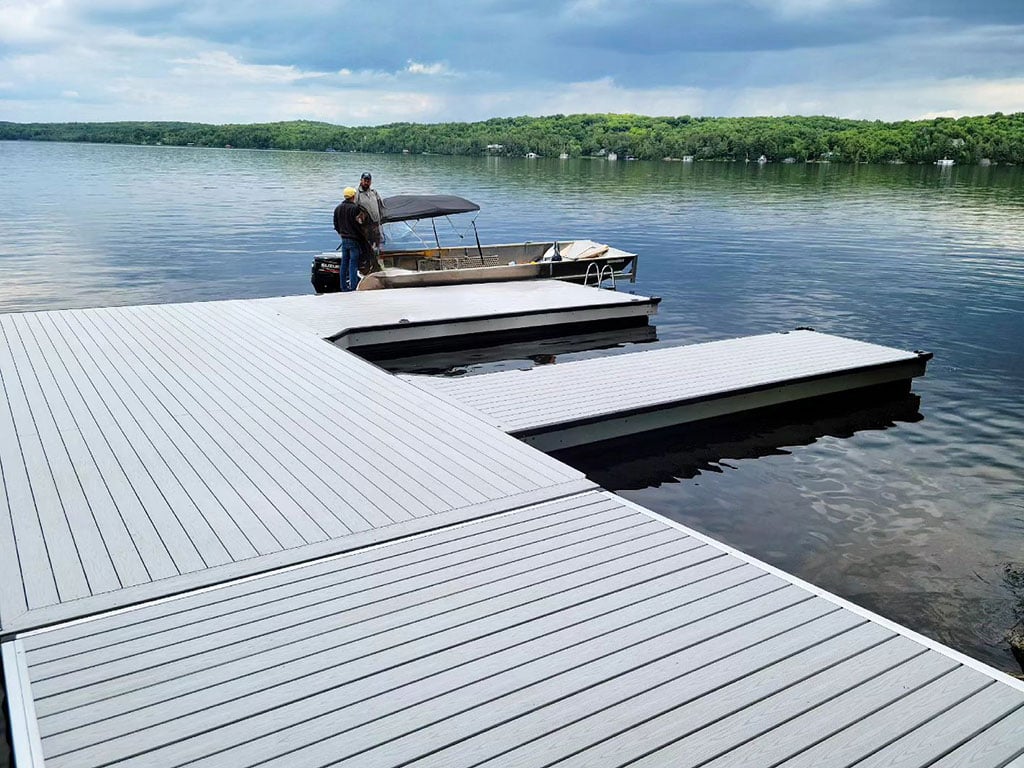
Choosing the Right Dock for Your Shoreline
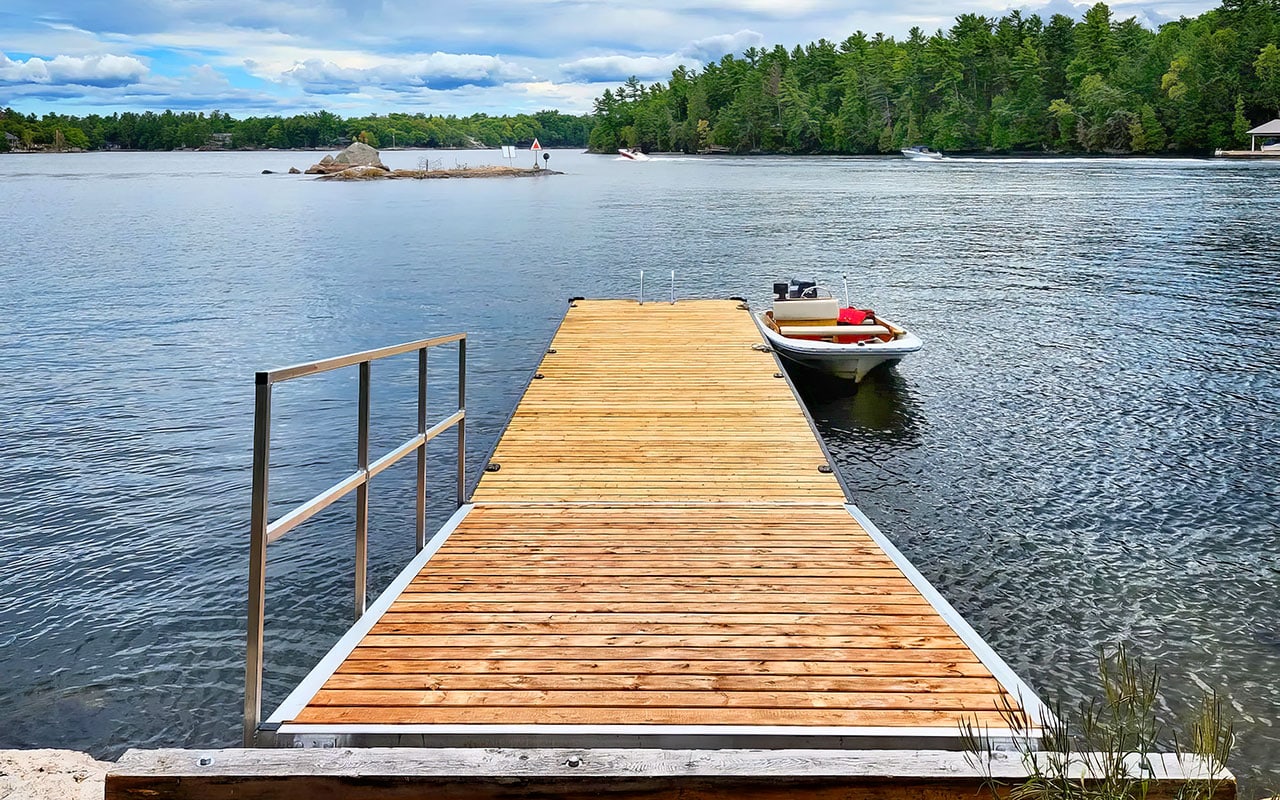
Rocky bottoms and deep water call for docks built to perform through seasonal change.
Your Shoreline Determines Your Dock — Not the Other Way Around
It’s easy to focus on what a dock looks like. But what really matters is how your shoreline interacts with the dock over time.
A dock that works beautifully on one property may feel unstable or require constant adjustments on another. That’s why choosing the right dock starts with understanding your shoreline conditions — not selecting a pre-set design.
Water Depth and Bottom Conditions Matter
Water depth and lakebed composition play a major role in how a dock is anchored, how it moves, and how stable it feels underfoot.
Ontario shorelines can include:
- Soft or silty bottoms
- Packed sand
- Gravel or stone
- Solid rock shelves
- Sudden drop-offs
Each condition affects anchoring, stability, and long-term performance — even floating docks must account for bottom conditions.
Shoreline Slope and Access Points
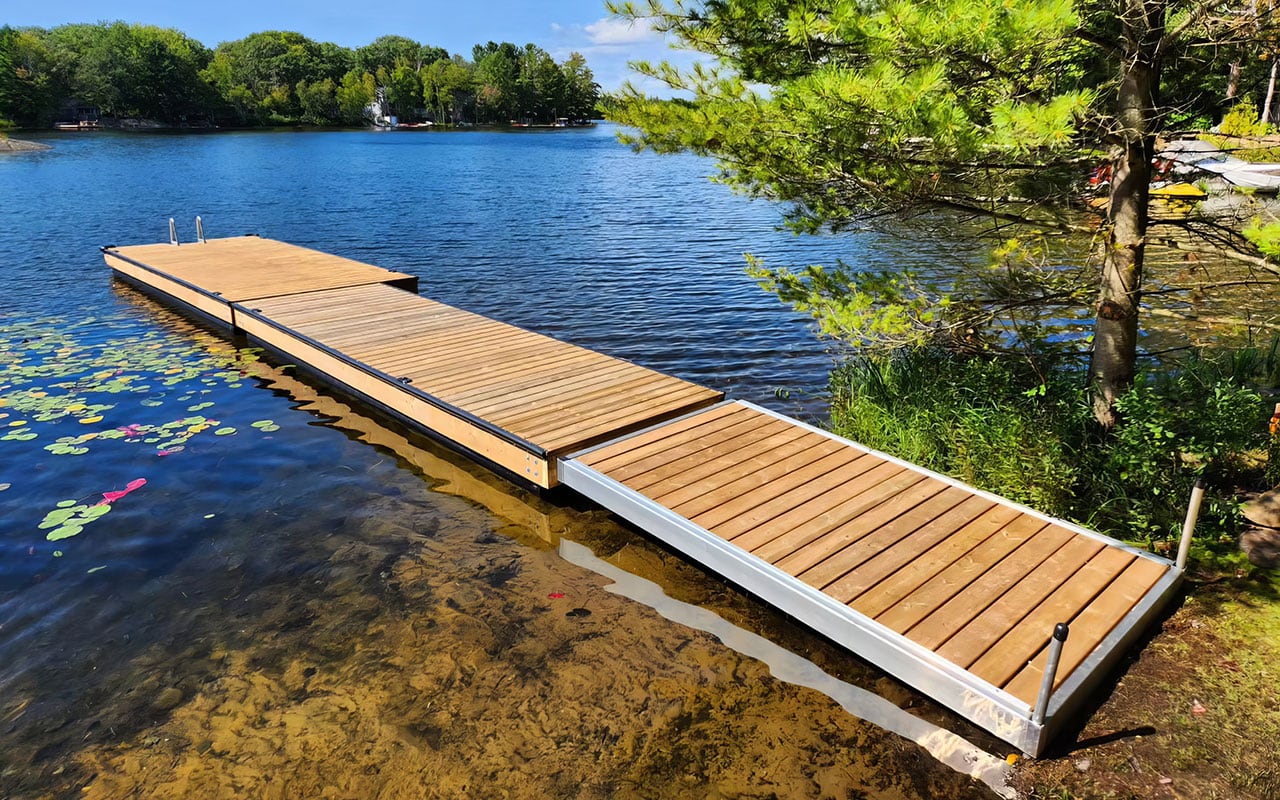
The slope of your shoreline influences how easily you can access your dock and how transitions are designed between land and water.
Steep or uneven shorelines may require:
- Custom ramp lengths
- Specific hinge placements
- Adjusted dock heights
Gentler slopes offer more flexibility, but still need to account for seasonal water movement. A properly designed transition ensures safe, comfortable access throughout the season.
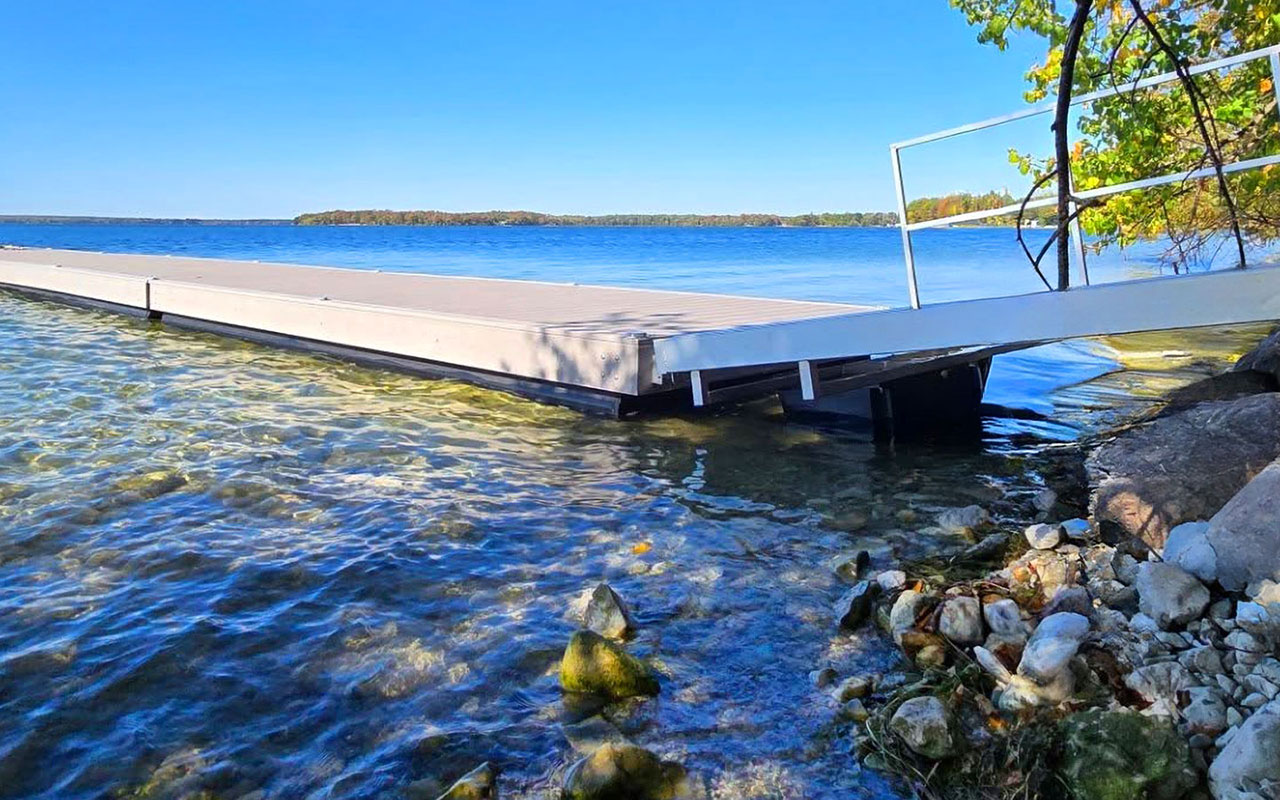
Exposure to Wind, Waves, and Water Movement
Some shorelines are naturally protected. Others face open water, prevailing winds, boat traffic, or river current.
Exposure affects:
- Dock movement and flex
- Mooring and anchoring strategy
- Frame design and connection points
Open or high-energy shorelines often require additional reinforcement, anchoring, or layout adjustments to maintain stability and longevity.
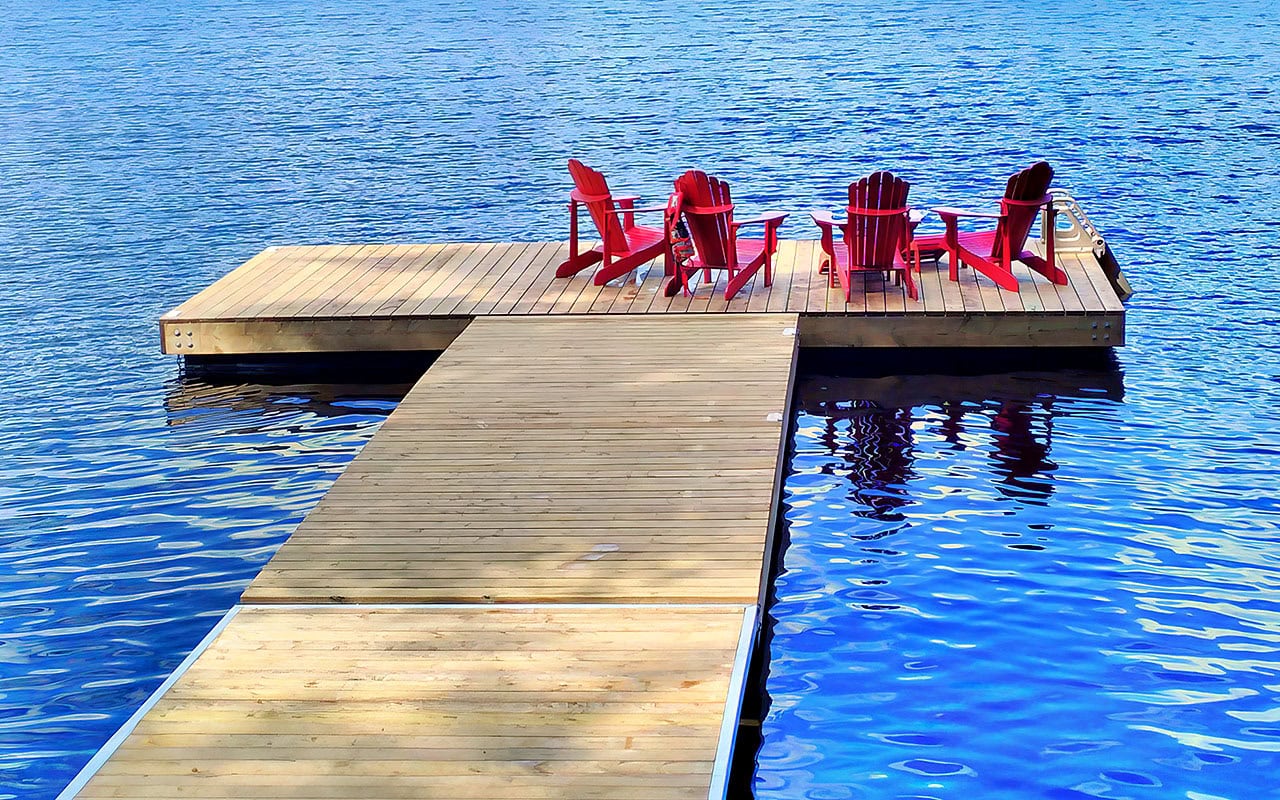
Seasonal Water Changes in Ontario
Water levels in Ontario can change significantly throughout the year due to rainfall, runoff, dam systems, and seasonal conditions.
Designing for these fluctuations helps ensure:
- Consistent dock height and usability
- Reduced stress on connections and anchors
- Easier seasonal adjustments
Floating docks are often well-suited for areas with changing water levels — but only when they’re configured correctly for the shoreline.
How You Use Your Dock Matters Too
Your shoreline is only part of the equation. How you plan to use your dock also influences its design.
Considerations include:
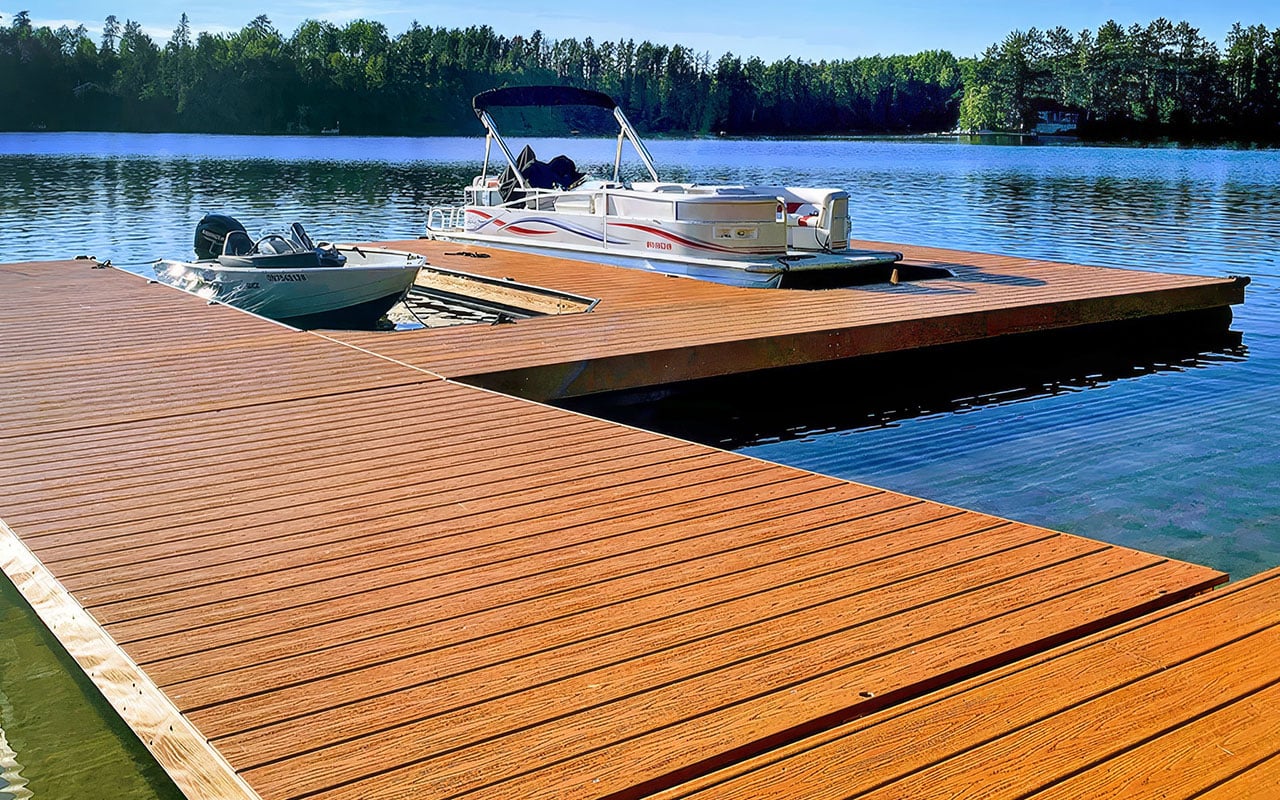
- Boat size and type
- Mooring needs
- Swimming and lounging space
- Foot traffic and safety
- Accessories like ladders, benches, or lifts
A dock designed around real usage feels better day-to-day and avoids compromises later.
Why a Custom Approach Works Best
Because no two shorelines behave the same way, dock systems shouldn’t be treated as interchangeable.
By considering depth, bottom conditions, exposure, seasonal changes, and usage together, it’s possible to design a dock system that fits your shoreline — not the other way around.
This approach leads to better stability, longer lifespan, and a dock that feels solid every time you step on it.
Ready to Choose the Right Dock for Your Shoreline?
If you’re planning a new dock or replacing an existing one, we’d be happy to talk through your shoreline conditions, usage needs, and options — and help design a dock system built specifically for your waterfront.